This project aims to reconstruct and promote the value of the statue of the goddess Isis discovered at the archaeological site of Clunia (Burgos) through the use of new technologies. It is one of the key pieces of the Museum of Burgos and holds significant cultural value for the people of Burgos. The project therefore seeks to bring the statue closer to the public and generate an impact across different areas. To achieve this, several initiatives have been developed, including the digital reconstruction of the statue, the creation of several immersive Virtual Reality experiences, the production of videos, and the development of outreach activities and educational materials. The results obtained have been applied across different fields. In the area of scientific research, they have led to several publications on the statue and its historical context. In education, the project has been integrated into the curriculum of several university courses, while in the field of public outreach, various activities and events have been organized for the general public. All these initiatives have been carried out in collaboration with different institutions and research groups, including the University of Salento, the Museum of Burgos, the PAINT Teaching Innovation Group, and the ARHISMO Research Group.


ISIS OF CLUNIA RESEARCH PROJECT
IN COLLABORATION WITH

The main objective of this project is to reconstruct and promote the value of the statue of the goddess Isis, facilitating its use in research, education, and public outreach. To achieve this objective, the following sub-objectives were established:
• VIRTUAL RECONSTRUCTION
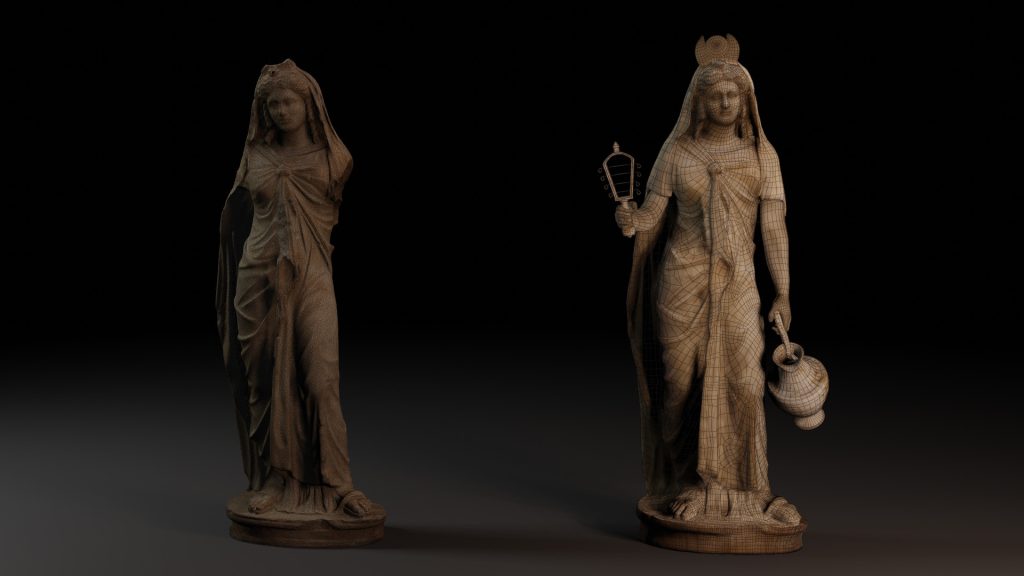
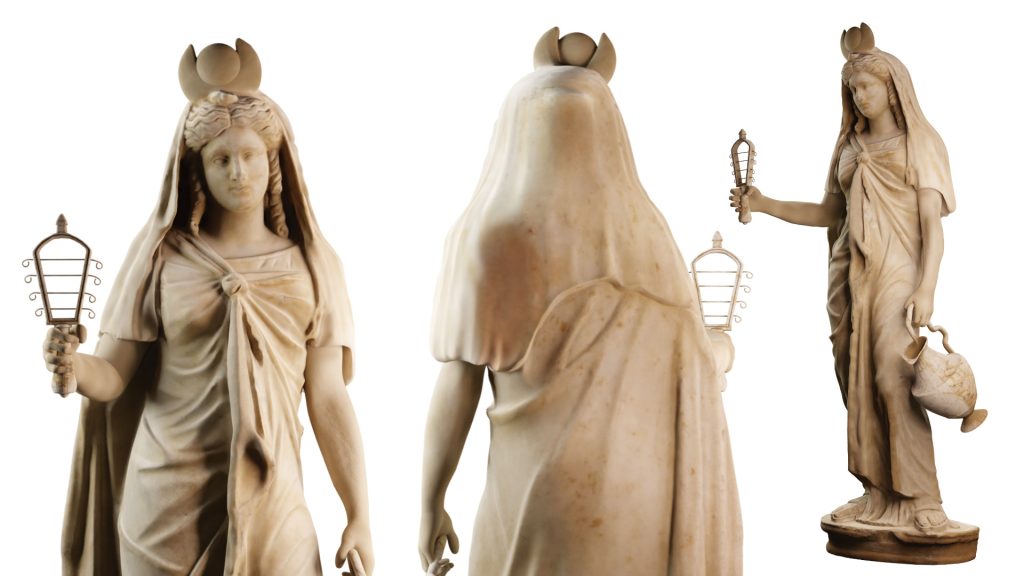
The statue was reconstructed in a high level of detail based on historical and archaeological research into the original artefact. Several digital modelling and processing techniques were used to create an optimised and lightweight 3D model suitable for use across different applications and platforms.
• PUBLIC OUTREACH
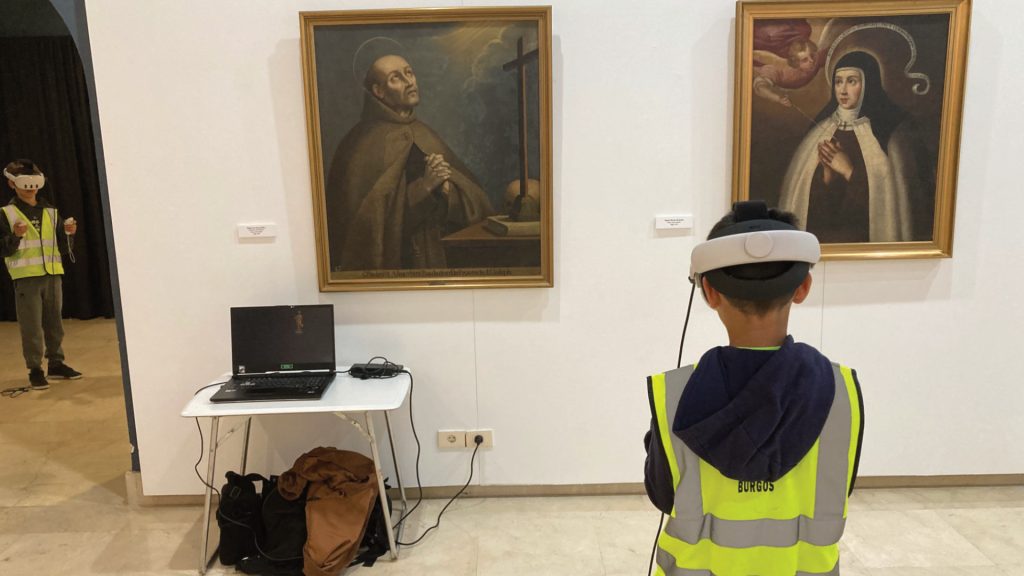
Based on the resulting 3D model, different digital resources and platforms were developed to facilitate the dissemination of the project. These included several educational and outreach videos, as well as immersive Virtual Reality experiences. These resources were subsequently used in various activities and events organised by the University of Burgos and the Museum of Burgos.
• RESEARCH
The digital resources and products developed as part of the project were also used as research tools for studying user experience and the design of museum and educational outreach experiences.
• EDUCATION
The developed resources were integrated into the curricula of several courses within the Bachelor’s Degrees in History and Heritage and Video Game Design at the University of Burgos. This allowed the project to be used as an educational resource and helped bring historical and archaeological heritage closer to students through the use of new technologies.
As a result of this project, several digital resources have been developed, including videos, immersive Virtual Reality experiences, and educational materials. These resources have been used for different purposes, particularly in research, education, and public outreach. The main outcomes are described below:
• 3D MODEL
The 3D model was the first step of the project. It provides a virtual reconstruction of the statue based on extensive historical and archaeological research. The model was designed to be lightweight and optimized for integration into iVR experiences, while also being suitable for use as a visualization and research resource. It served as the foundation for the subsequent stages of the project. The model is available here.
• VIDEO
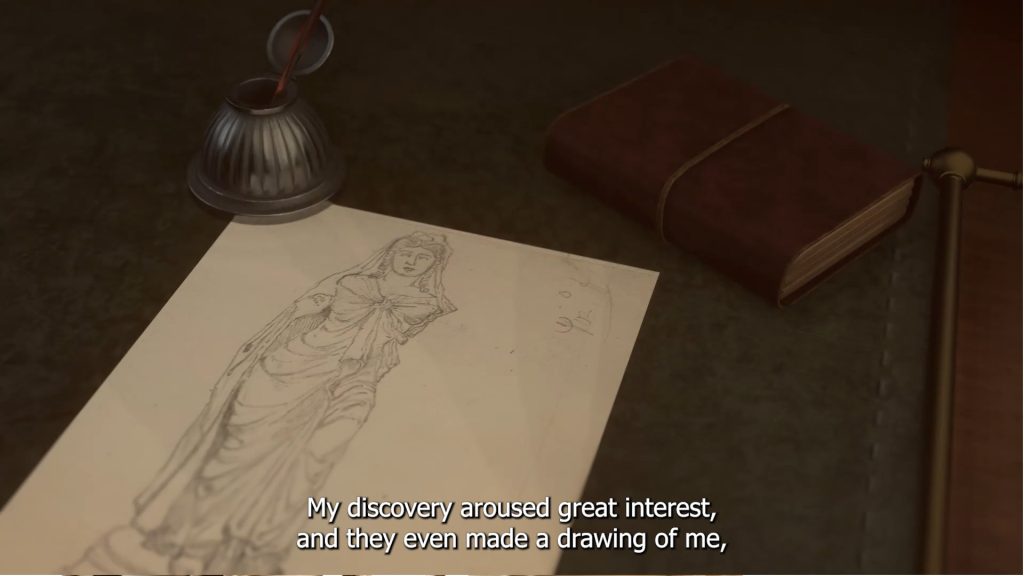
Taking advantage of the animation and visualization possibilities offered by the 3D model, a documentary-style video was created presenting the main characteristics of representations of Isis, the specific features of this particular statue, and its reconstruction. The video was developed with accessibility in mind and has been used for both public outreach and educational purposes. It can be viewed here.
• EDUCATIONAL IVR EXPERIENCE
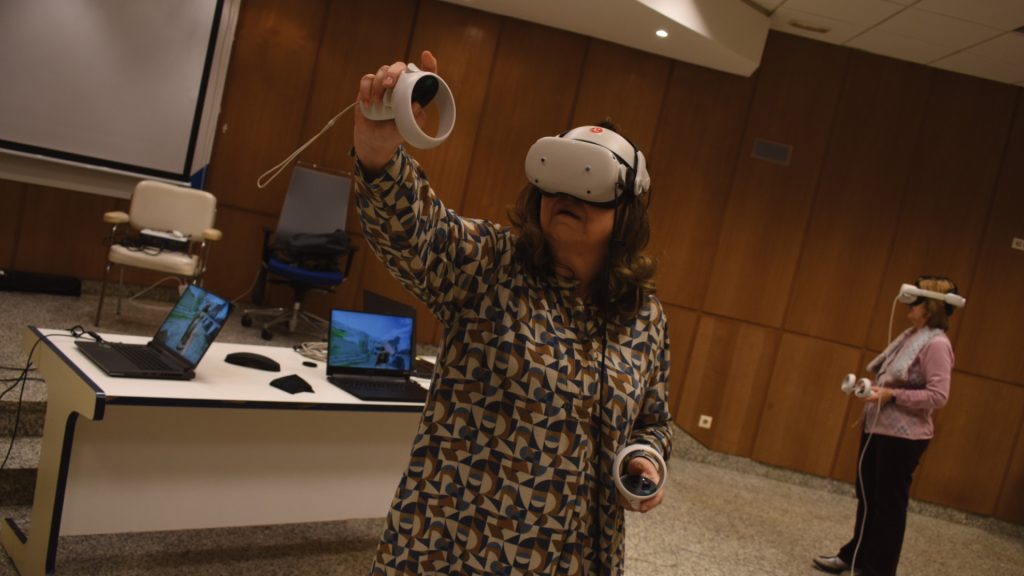
The content of the video was adapted into an interactive iVR experience, introducing progressive levels of interaction to encourage users to explore the content. This experience has been used both in educational activities and public outreach events.
• DISSEMINATION IVR EXPERIENCE
The original iVR experience was subsequently adapted into a shorter and more streamlined version designed for large-scale public outreach activities. This version was used at events such as the 2025 and 2026 Noche Blanca, where more than 300 people participated in the experience. It can be downloaded here.
• EDUCATIONAL MATERIALS
All the resources developed throughout the project were integrated into the curricula of several courses within the Bachelor’s Degrees in History and Heritage and Video Game Design at the University of Burgos. Specific teaching units were created to facilitate their use in the classroom. These materials are available here.
Rodriguez-Garcia, B., Miguel-Alonso, I., Checa, D. et al. Exploring age-related differences in immersive Virtual Reality experiences for Cultural Heritage. Virtual Reality (2026). https://doi.org/10.1007/s10055-026-01409-z
Rodriguez-Garcia, B., Corchia, L., Zaparaín Yáñez, M. J., & De Paolis, L. T. (2026). The Virtual Reconstruction of a Statue of Isis Unearthed at the Roman City of Clunia (Spain): A 3D Model for Interactive Virtual Reality Experiences. Journal on Computing and Cultural Heritage, 19(1), 1–23. https://doi.org/10.1145/3774911
Rodriguez Garcia, B. (2025). Optimization of Immersive Virtual Reality Experiences for the Dissemination of Cultural Heritage Reconstructions [PhD dissertation, Universidad de Burgos]. https://doi.org/10.36443/10259/11624
This work was partially supported through Humanaid project (TED2021-129485B-C43) funded by the Ministry of Science and Innovation of Spain (MCIN/AEI/10.13039/501100011033); the REMAR Project (Reference Number: CPP2022-009724) supported by the Ministry of Science and Innovation of Spain (MCIN/AEI/10.13039/501100011033) by the European Union “NextGenerationEU”/PRTR funds and the grants to Teaching Innovation Groups for the development of teaching materials for the years 2025 and 2026.
Project details
PROJECT TITLE:
Isis of Clunia research project
FIELD:
Education
LAST VERSION RELEASE:
September 2026
DOWNLOAD LINK:
Soon