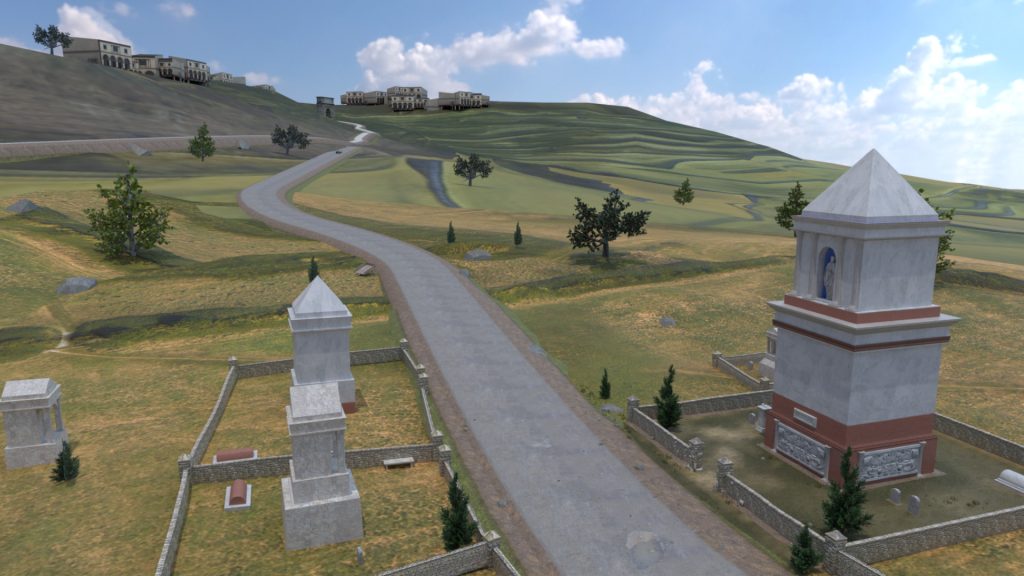
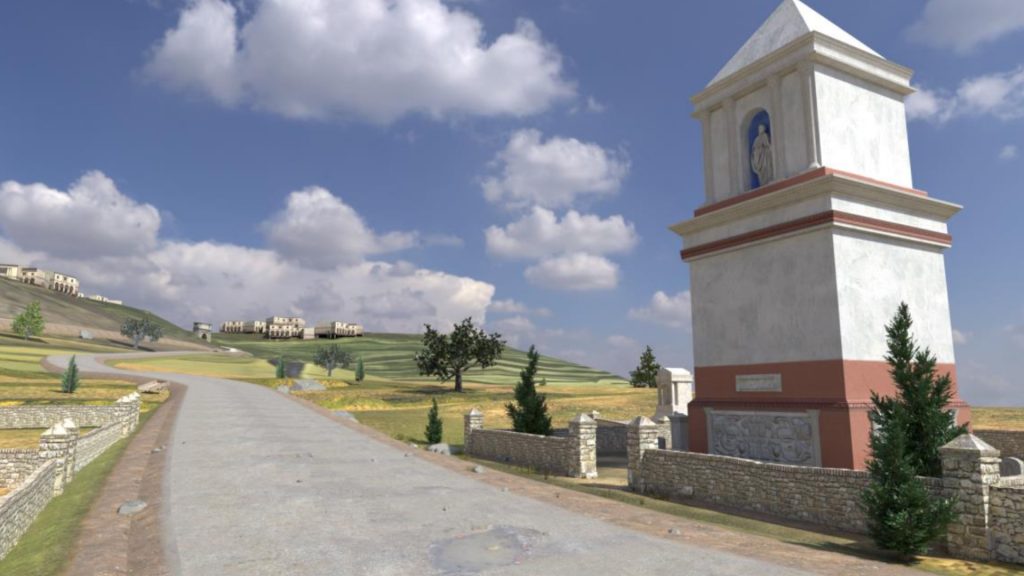
This project presents the virtual reconstruction of the southern area of the Roman necropolis of Clunia, located in Burgos, Spain, with particular emphasis on its funerary tower. The virtual reconstruction has also been implemented as an immersive Virtual Reality experience, allowing users to explore the site from a first-person perspective while following an explanatory audio guide. The project was developed as a Bachelor’s Final Degree Project in Game Design, in collaboration with the Government of Castilla y León, the Museum of Burgos, and the PAINT Teaching Innovation Group.


Necropolis of Clunia: 3d reconstruction

IN COLABORATION WITH:



The purpose of this project is to develop a highly accurate virtual reconstruction of the southern area of the necropolis of the Roman city of Clunia. The reconstruction aims to faithfully represent its most significant visual, architectural, and archaeological features, achieving a high degree of historical accuracy. he resulting environment is designed to be experienced through an immersive Virtual Reality experience. The main objectives of this project are:
• HISTORICAL ACCURACY IN RECONSTRUCTION AND REPRESENTATION
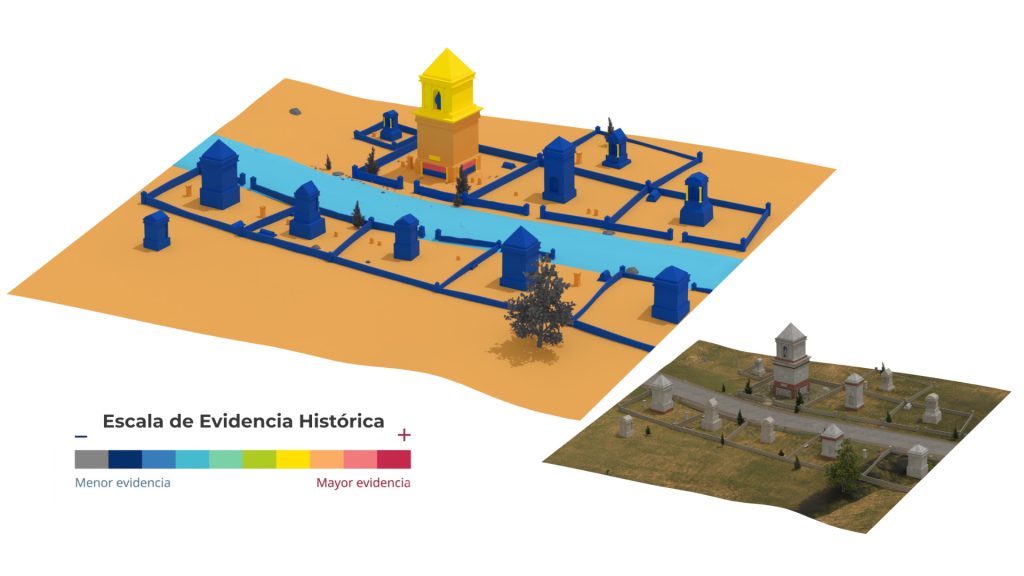
The reconstruction was developed based on a comprehensive historical and archaeological study of the area. Furthermore, the project focused on the section of the necropolis for which the greatest amount of historical and archaeological evidence is available, in order to ensure the highest possible level of accuracy and fidelity to the original site.
• HIGH LEVEL OF DETAIL
A high level of detail has been achieved to enhance both visual fidelity and immersion in the Virtual Reality environment.
• DISSEMINATION
An audio guide featuring spatial audio has been developed to convey the historical information associated with the reconstruction in an accessible and engaging way, complementing the visual guidance provided within the Virtual Reality experience.
• SHORT AND SIMPLE
The experience is brief and requires no prior explanation, making it easy to install in museums and exhibitions.
This project was carried out using Reality Scan, Blender, Photoshop and Unreal Engine 5 as the primary tools
• PHOTOGRAMMETRY SURVEY
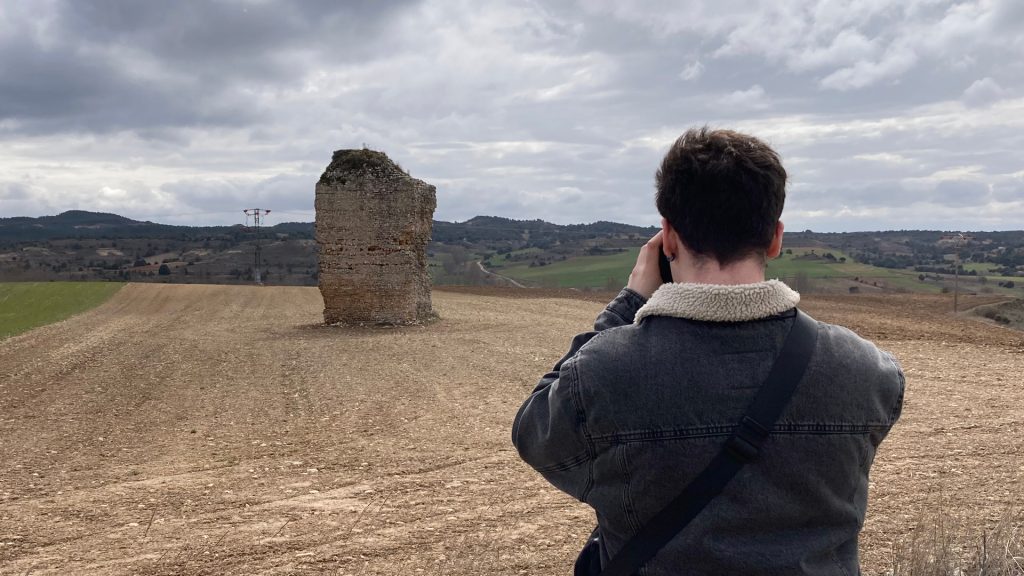
First, a photogrammetry survey of the site was conducted using Reality Scan.
• HISTORICAL DOCUMENTATION AND ARCHEOLOGICAL WORK
A historical documentation process was conducted, including an analysis of the characteristics and architectural features of other Roman necropolises. In addition, a previously conducted archaeological study of the funerary tower was used as the basis for developing its reconstruction hypothesis.
• 3D MODELLING
Using Blender, the different elements of the necropolis were modelled and optimized, with particular attention given to the funerary tower and its surroundings.
• TEXTURING
The 3D models were textured using Photoshop, optimizing both the number of texture maps and their overall quality to achieve an efficient and visually consistent result.
• PROGRAMMING
All these assets were integrated into Unreal Engine 5 to create a smooth immersive Virtual Reality experience.
soon
–
Project details
PROJECT TITLE:
Necropolis of Clunia: 3D reconstruction
STUDENT'S NAME:
Gonzalo Tajadura Díez
FIELD:
Cultural Heritage
DEGREE:
Videogame Design
COLLABORATION WITH:
Junta de Castilla y León, Museo de Burgos and PAINT
LAST VERSION RELEASE:
June 2025