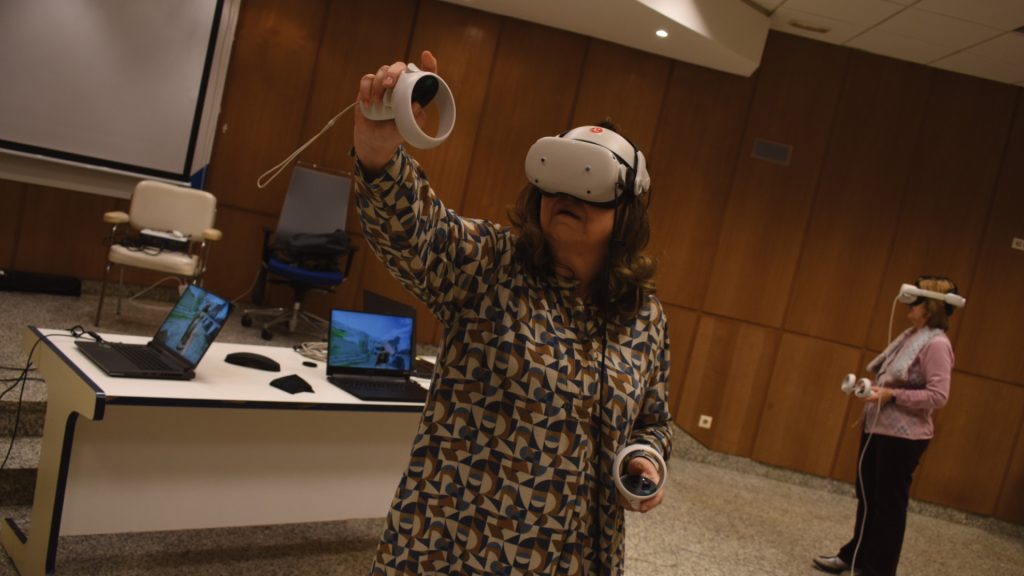
Patrimonio Intergeneracional y Nuevas Tecnologías (PAINT) is a Teaching Innovation Group at the University of Burgos focused on the use of new technologies, particularly Virtual Reality, to promote and disseminate Cultural Heritage among audiences of different ages. The group is made up of professors from the University of Burgos belonging to the areas of Computer Languages and Systems and Art History: María José Zaparaín Yáñez, the group’s director, Andrés Bustillo Iglesias, Julián Hoyos Alonso, René Jesús Payo Hernanz, and Bruno Rodríguez García. One of the group’s main areas of work is the development of digital educational resources based on new technologies, designed and evaluated for use with audiences of different ages. Within this framework, the group develops a range of resources, including 3D reconstructions, videos, Virtual Reality experiences, and other interactive materials, aimed at both education and the dissemination of Cultural Heritage. PAINT also collaborates with various institutions and universities in the development of its projects, including the Museum of Burgos and the University of Salento.

PAINT
Teaching innovation group
OUR PARTNERS

The main objective of PAINT is to bring knowledge and research on Cultural Heritage closer to audiences of all ages through the use of new technologies, both through their direct application in the classroom and through public outreach activities. To achieve this, the group focuses its work on three main objectives:
• TRANSFER OF HISTORICAL AND TECHNOLOGICAL RESEARCH
PAINT’s areas of work integrate the results of research carried out by research groups specializing in new technologies, art history, and heritage. This knowledge is transformed into accessible resources and experiences for audiences of different ages, creating new ways of engaging with cultural heritage and allowing people to better understand the results of historical and artistic research.
• EXPLORING NEW TECHNOLOGIES IN EDUCATION AND PUBLIC OUTREACH
PAINT develops and evaluates digital resources using both established technologies, such as video and 3D animation, and more recent technologies, particularly Virtual Reality. These resources are implemented in real educational contexts and public outreach activities in order to explore their potential and develop new ways of communicating knowledge about cultural heritage.
• IMPROVING USER EXPERIENCE FOR AUDIENCES OF DIFFERENT AGES
One of PAINT’s main areas of focus is exploring how new technologies can be made accessible to people from different generations. To this end, different interaction strategies and user experience approaches are designed and tested, with the aim of making the resources developed intuitive and accessible to audiences with different ages, backgrounds, and levels of technological experience.
As a result of these objectives, PAINT has developed a range of digital resources over the years aimed at bringing cultural heritage closer to audiences of different generations through the use of new technologies. The main resources developed include:
• ISIS OF CLUNIA PROJECT
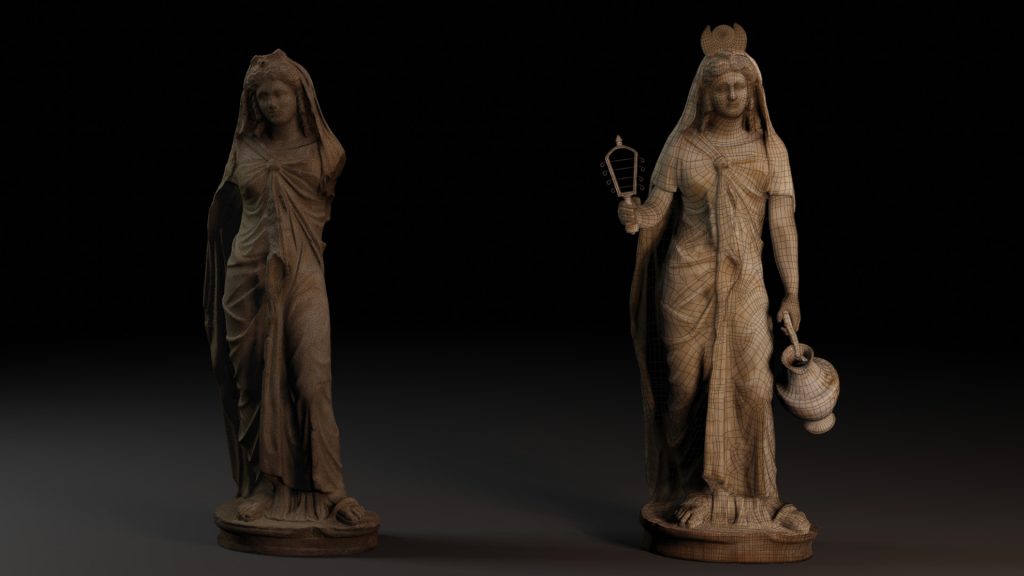
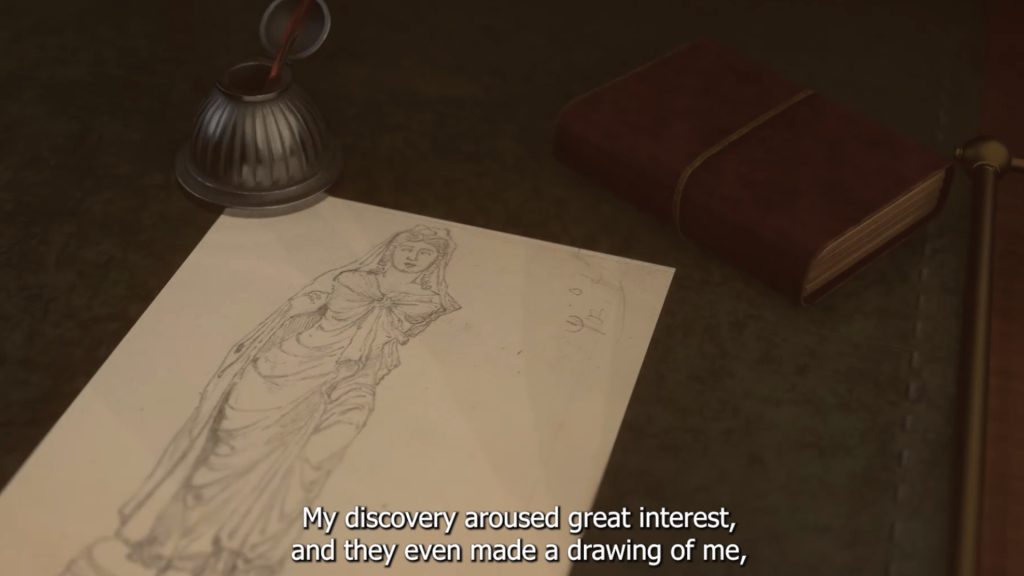
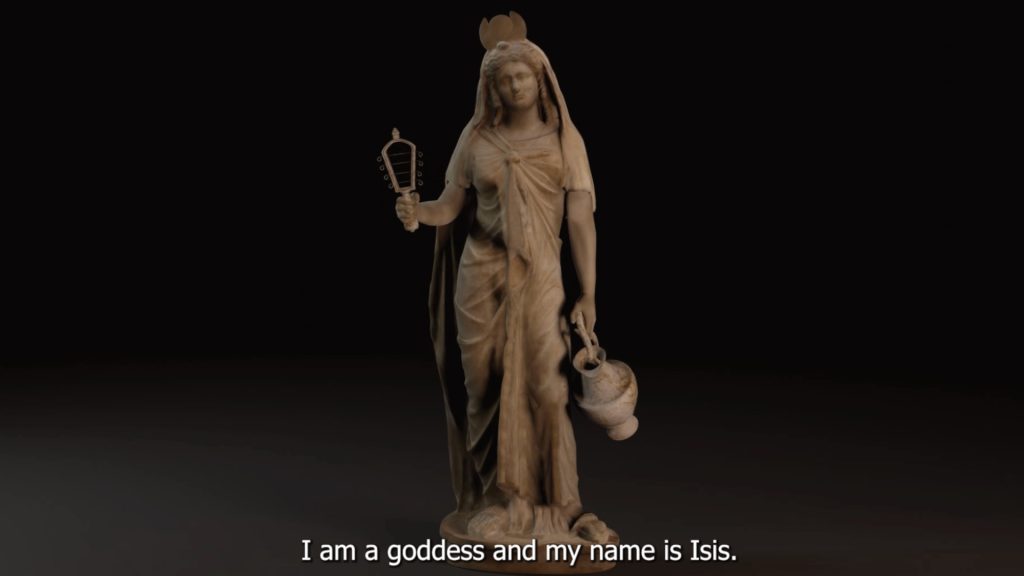
This is, to date, the largest project developed by PAINT. The project is structured around the virtual reconstruction of the statue of the goddess Isis discovered at Clunia, carried out in collaboration with the University of Salento. Based on this reconstruction, a range of resources has been developed, including educational videos, several Virtual Reality experiences, and dedicated teaching materials. These resources have been integrated into different degree programmes at the University of Burgos and into activities at the Museum of Burgos. Detailed information about this project can be found at the following link.
• RECONSTRUCTION OF THE CLUNIA NECROPOLIS
This project presents the virtual reconstruction of the southern necropolis of the Roman city of Clunia. The reconstruction has been integrated into a simple Virtual Reality experience designed for public outreach, allowing users to explore and appreciate the most relevant elements of the reconstructed site. The project was developed as part of the Bachelor’s Thesis of a student from the Bachelor’s Degree in Video Game Design at the University of Burgos. Further information about this project can be found at the following link.
• ANIMATION OF THE STATUES OF THE SAN PABLO BRIDGE IN BURGOS
This project aims to bring the statues of the San Pablo Bridge in Burgos to life by creating animated digital replicas that are ready to be integrated into future digital experiences and educational materials. The project was developed as part of the Bachelor’s Thesis of a student from the Bachelor’s Degree in Video Game Design at the University of Burgos and is currently still under development.
• RECONSTRUCTION OF THE SAN SALVADOR DE OÑA ALTARPIECE
This project aims to digitally reconstruct the former altarpiece of San Salvador de Oña and integrate it into a Mixed Reality experience. In this experience, users can participate in reconstructing the altarpiece while learning about its configuration and structure. The project was developed as part of the Bachelor’s Thesis of a student from the Bachelor’s Degree in Video Game Design at the University of Burgos, in collaboration with the Museum of Burgos, and is currently still under development.
• ACTIVITIES AT THE MUSEUM OF BURGOS
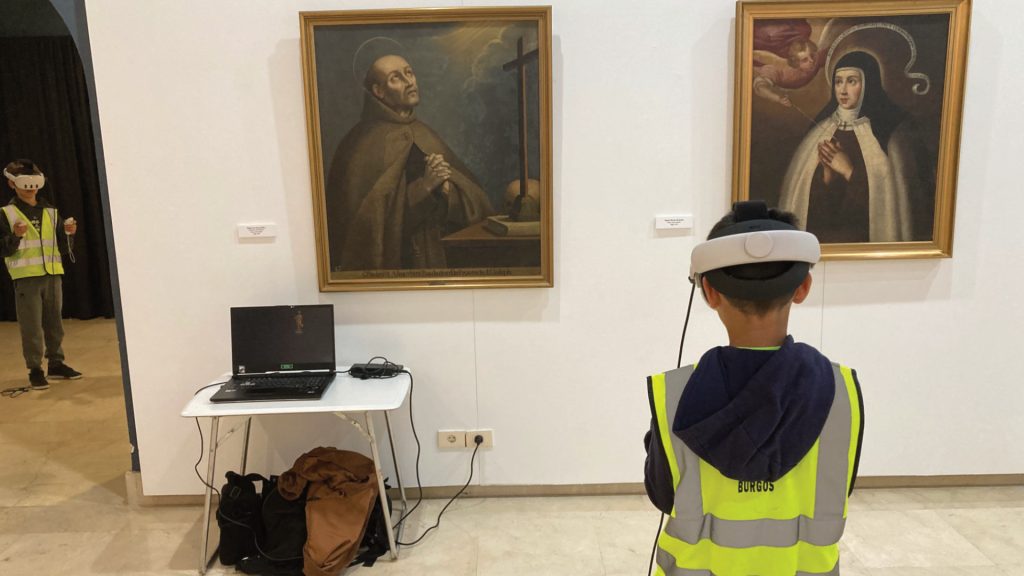
PAINT maintains a close collaboration with the Museum of Burgos, jointly organizing different educational and public outreach activities. These activities have been carried out since 2024 on at least annual basis. They include public outreach activities held as part of the Noche Blanca events, as well as educational activities aimed at primary schools in the city.
• INTEGRATION OF PAINT INTO UBU DEGREE PROGRAMMES
The activities and resources developed by PAINT have been integrated into the teaching of different degree programmes at the University of Burgos, particularly the Bachelor’s Degree in Video Game Design and the Bachelor’s Degree in History and Heritage. On the one hand, some of the resources developed are now part of the content of several courses within these programmes. On the other hand, students also participate directly in the development of new resources through their Bachelor’s Theses, thus linking their academic training with real-world projects in research, innovation, and cultural heritage outreach.
Rodriguez-Garcia, B., Miguel-Alonso, I., Checa, D. et al. Exploring age-related differences in immersive Virtual Reality experiences for Cultural Heritage. Virtual Reality (2026). https://doi.org/10.1007/s10055-026-01409-z
Rodriguez-Garcia, B., Corchia, L., Zaparaín Yáñez, M. J., & De Paolis, L. T. (2026). The Virtual Reconstruction of a Statue of Isis Unearthed at the Roman City of Clunia (Spain): A 3D Model for Interactive Virtual Reality Experiences. Journal on Computing and Cultural Heritage, 19(1), 1–23. https://doi.org/10.1145/3774911
Rodriguez Garcia, B. (2025). Optimization of Immersive Virtual Reality Experiences for the Dissemination of Cultural Heritage Reconstructions [PhD dissertation, Universidad de Burgos]. https://doi.org/10.36443/10259/11624
This work was partially supported by the grants to Teaching Innovation Groups for the development of teaching materials for the years 2025 and 2026.
Project details
PROJECT TITLE:
PAINT Teaching Innovation Group
FIELD:
Education
LAST VERSION RELEASE:
September 2026
DOWNLOAD LINK:
–